


Borderline personality disorder and tension
Hello, my dears
Today I want to tell you about tension in borderline personality disorder. Controlling this tension is a crucial factor in the entire process of coping with daily life and managing the illness. The higher the internal tension, the less control I have over the destructive aspects within me.
In DBT therapy, tension is categorized as low to high and rated from 0 to 10. It looks something like this:
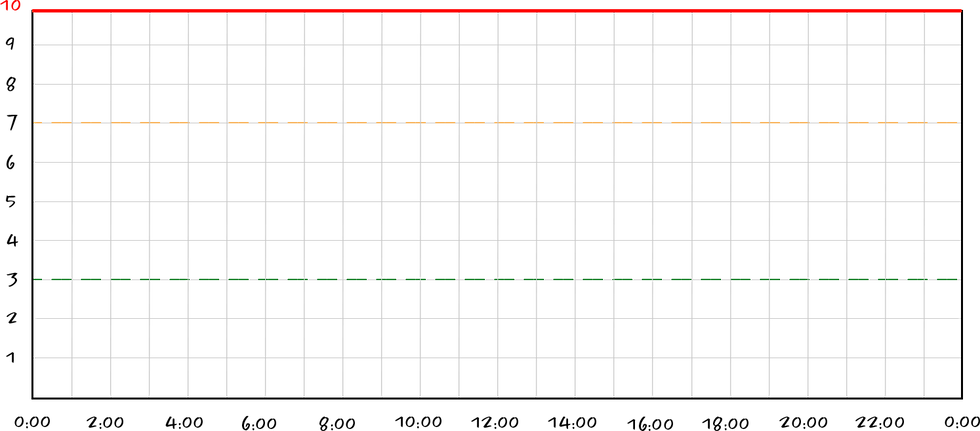
Between 0 and 3, I'm in a low-tension zone, meaning I'm still relaxed and able to act rationally and make constructive decisions. So I'm in the green zone. Mindfulness skills are also quite helpful here.
Between 4 and 7, I'm already in a moderate state of tension, and that's when I should start trying to reduce it. Because that's when negative thoughts, stress, hectic activity, and slightly irrational thinking begin to creep in. Of course, the higher the tension, the more negative and severe the symptoms become. So, I need to start using my coping skills, how I manage my emotions, my self-esteem, and my interpersonal skills. Tactile and mental skills like fidget spinners, Magic Cubes, or Sudoku are also very helpful for me. Keeping my hands busy is especially helpful when I'm nervous. And if I have interpersonal problems, I often call my dad or my best friend, or talk to my partner when he's not at work, and get advice and support from them. Or if I notice that the tension is already very close to tipping over, then a walk with my dog Blue often helps me, because then I have to concentrate on her outside and at the same time release energy while walking.
Now we come to the most difficult part of the tension... 8-10. The so-called high tension. When I'm in a state of high tension, it's usually already too late. I can barely think straight; Brunhilde usually has me completely in her grip. Panic attacks, dissociation, crying fits, outbursts of anger, destructive behavior patterns... Anything can happen there... I'm often unable to apply so-called stress tolerance skills on my own in this state of high tension. Especially not when I dissociate. Then I'm often either completely mentally gone for a while or only partially present... Depending on the stress level, I can either quickly come back and pull myself out of it, or not... Then I also need external help, where I'm brought back to the here and now with stimuli and reorientation questions.
Over the past six months, I've learned a lot about managing my stress and using the skills I have. I've stopped smoking weed, abusing alcohol, and haven't self-harmed for six months. These were all very destructive behaviors that I struggled with for a long time, but I've slowly gotten them under control by intensively studying emotion regulation and finding constructive ways to deal with them. I'll discuss these different skills in more detail in a separate post.
Nevertheless, it's a challenge every single day, and I don't always manage to maintain balance, especially when I'm exposed to many external stressors over an extended period. Then my baseline tension is simply too high for days on end, and I forget to practice my skills, or I simply can't manage to reduce my tension at all.
I hope I was able to give you a small insight into the topic of tension and emotion regulation, and I hope you enjoyed the post.
Warm greetings and have a nice day!


Comments